Office: 348 Ferland EEDC
Lab: 319B and 321 Ferland EEDC
Phone: 207.581.2288
Fax: 207.581.2323
Email: david.neivandt@maine.edu
Social: LinkedIn
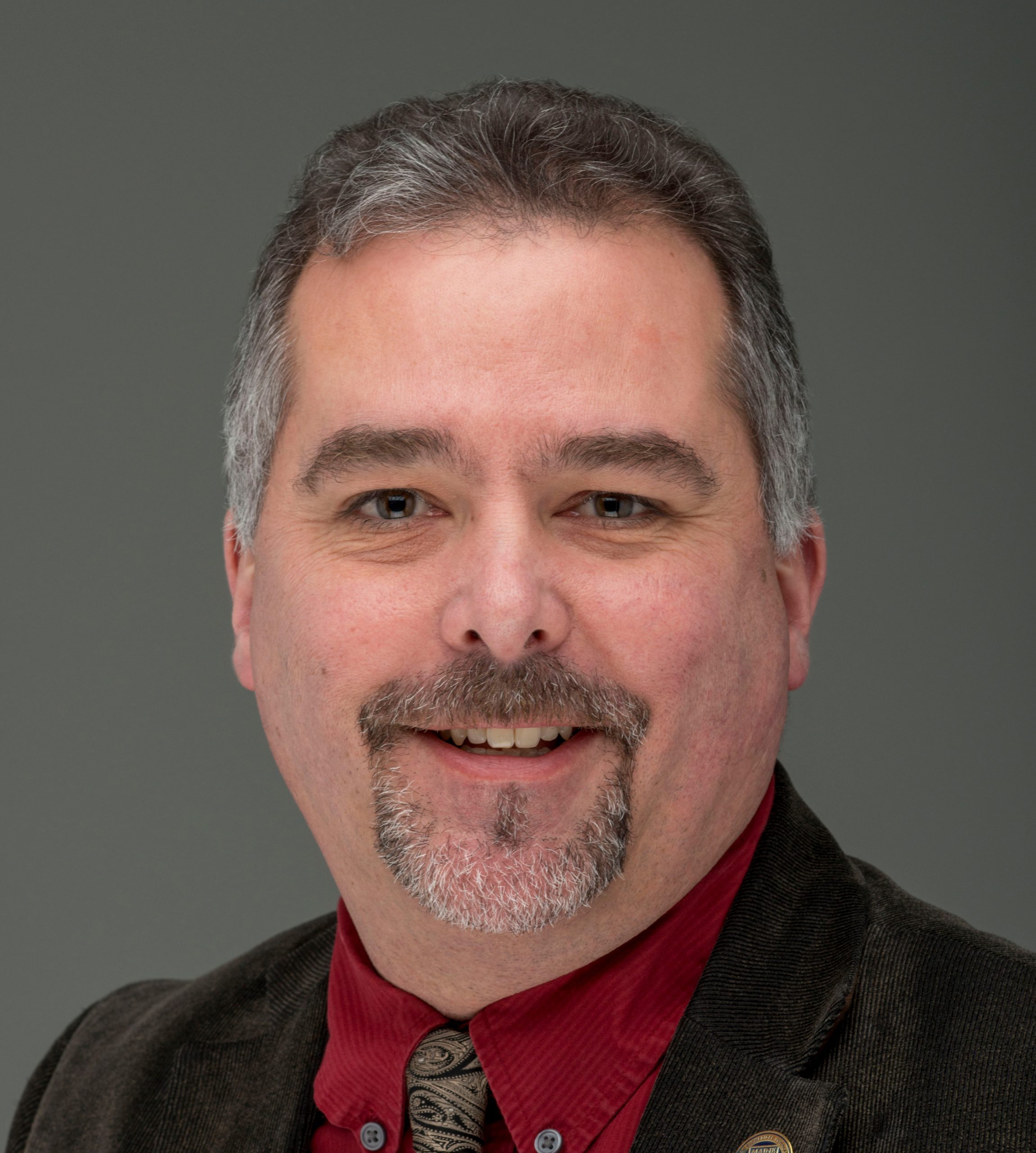
David J. Neivandt
Professor of Biomedical Engineering, Chemical Engineering
Education:
- Ph.D. Chemistry, The University of Melbourne, 1999
- B.S. (Hons.) Chemistry, The University of Melbourne, 1994
Research Interests
- Engineered Implants
- Biodegradable Composites
- Waste Material Utilization
- Interfacial Chemistry
Affiliations
- Member American Institute of Chemical Engineering
- Member American Chemical Society
Biography
Throughout his career Professor Neivandt’s research has focused in four fields; i) the determination of the interfacial orientation and conformation of polymeric (protein) and surfactant (lipid) species, ii) gelation, dispersion, and phase separation of natural and synthetic polymeric species iii) engineered implants for enhanced wound repair and iv) the development of advanced material systems and processing methodologies employing environmentally benign components.
Interfacial Orientation and Conformation of Polymeric (Protein) and Surfactant (Lipid) Species
The aim of this aspect of Professor Neivandt’s research was to determine detailed orientational and conformational information of interfacial species in industrially and biologically relevant systems with the intention of gaining insight into how the surface structure affects the properties of the system. The primary technique employed was the surface specific second order non-linear optical technique of Sum Frequency vibrational Spectroscopy (SFS). This high energy laser technique provides spectra from which the polar orientation of species resident at the interface may be determined from the relative phase of the resonant signal, while conformational information is reflected by the relative strength of the resonant signals. Professor Neivandt and his graduate students made some of the worlds first forays into the biological realm with SFS where the power of this technique elucidated fundamental questions which had remained unanswered. The research was highly collaborative and was performed with colleagues at Maine Medical Center Research Institute. Later work focused on combining SFS with Confocal Fluorescence Microscopy in a hybrid instrument. On an industrially relevant front Professor Neivandt probed polymer and surfactant orientation and conformation on mineral oxide surfaces such as pigments and fillers to ascertain how such parameters affect their performance in a variety of applications such as coatings.
Solution Phase Gelation/Dispersion of Natural and Synthetic Species
Upon starting at the University of Maine Professor Neivandt commenced research in the field of controlled polymeric gelation, dispersion and phase separation by leveraging his experience in polymer/polymer and polymer/surfactant interfacial interactions. This resulted in extensive contract work and industrially funded research including the development of a means to chemically enhance water removal in the papermaking process. Three patents have been issued from the resulting technology. Separately, through controlled cryogenic phase separation, the Neivandt Group developed a means of forming nanofibers of lignin which could be subsequently carbonized to carbon nanofibers. Finally, through application of the fundamentals of polymeric dispersions, Professor Neivandt and the UMaine Process Development Center created an aqueous based natural protein formulation for grease resistance which was patented (2010).
Engineered Implants for Enhanced Wound Repair
Professor Neivandt currently performs research in the field of enhanced wound repair in two primary areas; porous implants for soft tissue ingrowth, and conduits for peripheral nerve repair. Implants with a high degree of porosity have been known for some time to promote bone ingrowth, however very little work has been performed to determine the propensity of soft tissues to populate such materials. In collaboration with an orthopedic surgeon and two veterinarians Professor Neivandt determined that in fact skin, fascia, fat and muscle cells will grow into porous transcutaneous implants, and further, that they will do so sufficiently quickly to prevent infection without prolonged use of antibiotics. This work was awarded a US Utility Patent in 2020, with a second filing under review. The peripheral nervous system has the innate ability to self-repair, however success decreases rapidly for injuries greater than approximately 1mm. In collaboration with investigators in academia and in industry, Professor Neivandt recently demonstrated in two murine and one baboon study, that conduits comprising cellulose nanofiber are highly effective at promoting peripheral nerve repair, and have led to functional recoveries of greater than 65%.
Development of Advanced Material Systems and Processing Methodologies Employing Environmentally Benign Components
In recent years Professor Neivandt has focused research efforts heavily in the area of advanced materials and processing methodologies. In particular he seeks to find value-added uses for waste and low value biological materials. In 2018 Professor Neivandt was awarded a US Utility Patent for a biodegradable composite material comprising lobster shell and a natural matrix material. Recent work has focused on use of the composite in short term structural applications (including housing) utilizing the fact that it has compressive strength greater than concrete, and flexural strength that exceeds eastern white pine lumber-yet dissolves in water in a matter of weeks. In parallel he has worked to develop a foamed version of the composite as a replacement for non-biodegradable expanded polystyrene (EPS) in thermal insulation and impact absorbing applications. Separately, he has developed a novel drying technique that overcomes the issue of fiber and fibril aggregation during drying of cellulose nanofiber.